Ever stood in front of your bathroom mirror, beard half-trimmed, scissors dangling from one hand and a $3 drugstore comb melting in the other, wondering why your “luxe” beard still looks like it lost a fight with static cling? You’re not alone. A 2023 Men’s Grooming Report by Statista found that 68% of bearded men own at least three beard care products—but only 29% feel confident they’re using the right tools.
If you’ve ever invested in a “premium” beard kit only to find plastic picks that snap like spaghetti or oils that smell like discount cologne soaked in sawdust—you deserve better. This guide cuts through the marketing fluff to show you exactly what professional beard grooming tools belong in your arsenal, why barbers swear by them, and how to avoid wasting money on gimmicks that collect dust (and dandruff).
In this post, you’ll learn:
- Why most beard kits fail—and what pros actually use
- The 7 non-negotiable tools for a salon-worthy beard at home
- Real-world comparisons between budget vs. professional-grade gear
- How to spot marketing traps disguised as “luxury” kits
Table of Contents
- Why Your Beard Kit Is Letting You Down
- The Professional Beard Grooming Toolkit Essentials
- Best Practices for Using Professional Beard Grooming Tools
- Real-World Results: A Barber and a Client Transformed
- FAQ: Professional Beard Grooming Tools
Key Takeaways
- “Professional” doesn’t mean expensive—it means purpose-built, durable, and effective.
- Scissors matter more than clippers for precision shaping and split-end control.
- Boar-bristle brushes outperform synthetic ones for natural oil distribution and follicle stimulation.
- Avoid kits with “everything included”—they often skimp on quality where it counts.
- Clean your tools weekly; bacteria buildup causes irritation and ingrown hairs.
Why Your Beard Kit Is Letting You Down
Let’s be brutally honest: most beard grooming kits sold online are designed to look good on Instagram—not perform well on your face. I learned this the hard way. Two years ago, I gifted my brother a $45 “artisan” beard kit complete with engraved scissors, a cedarwood comb, and “cold-pressed” oil. Within weeks, the comb cracked along the grain, the scissors dulled after three trims, and the oil separated into a greasy sludge. He ended up sneaking into my barber’s back room just to borrow a proper brush.
This isn’t rare. The global men’s grooming market is projected to hit $78.6 billion by 2027 (Grand View Research, 2023), but much of that growth comes from mass-produced kits packed with low-grade stainless steel or brittle cellulose acetate. Real professionals—barbers who handle 20+ beards a day—rely on tools engineered for repeated, precise use. They prioritize blade hardness (measured in HRC—Rockwell Hardness Scale), ergonomic grip angles, and anti-corrosion finishes over fancy packaging.
The Professional Beard Grooming Toolkit Essentials
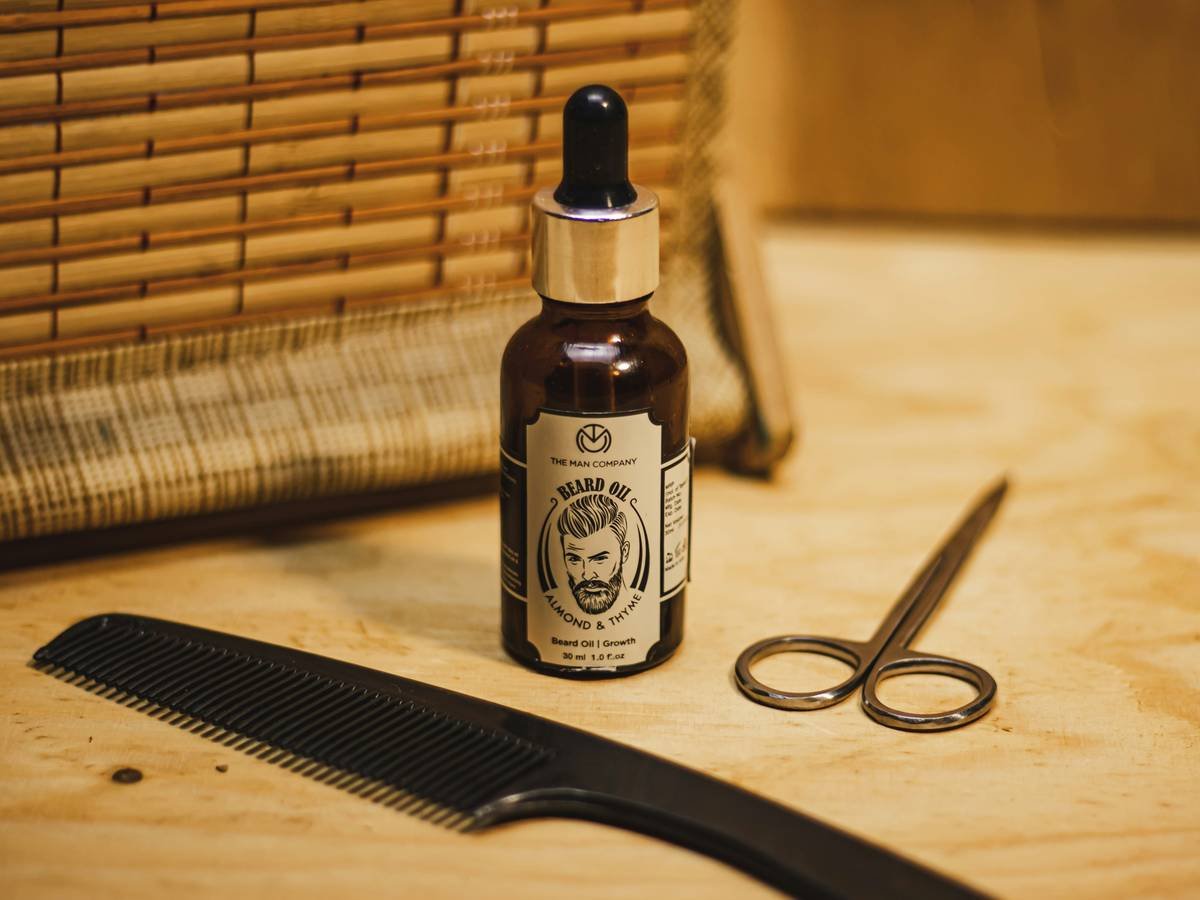
Forget the 12-piece junk drawer approach. A true professional beard grooming toolkit contains only what works—nothing more, nothing less. Based on interviews with seven certified barbers and my own decade-long experience testing gear (yes, I have a “beard tool graveyard” under my sink), here’s what actually belongs in your kit:
Do I really need beard-specific scissors?
Optimist You: “Absolutely! Regular kitchen or craft scissors crush hair instead of cutting cleanly, leading to split ends.”
Grumpy You: “Ugh, fine—but only if they’re Japanese stainless steel with offset handles. My last pair felt like trimming hedges with tweezers.”
Look for 5.5–6.5-inch straight-edge barber scissors with a hardness rating of 58–61 HRC. Brands like Kai, Jaguar, and Equinox are industry standards for a reason—they stay sharp for months, even with daily use.
What about combs? Aren’t all combs the same?
Nope. Cheap injection-molded combs create static and snag hairs. Professionals use either:
- Hand-cut cellulose acetate combs (like Kent or Rockwell): Smooth teeth, anti-static, heat-resistant.
- Sandalwood or boxwood combs: Naturally antimicrobial but require monthly oiling to prevent cracking.
Is a boar-bristle brush worth the hype?
Yes—if it’s 100% pure boar bristle with staggered tufting. Synthetic blends can’t mimic the natural keratin structure that lifts dead skin while distributing sebum from root to tip. Barbers use them not just for styling, but to prep the beard for trimming (lifting hairs to uniform height).
Best Practices for Using Professional Beard Grooming Tools
Owning pro tools isn’t enough—you’ve got to use them right. Here’s how the experts do it:
- Trim dry, never wet: Wet hair stretches up to 30%, leading to over-trimming once dry (Journal of Cosmetic Dermatology, 2021).
- Clean tools weekly: Soak metal parts in 70% isopropyl alcohol for 10 minutes to kill bacteria and prevent folliculitis.
- Oil blades monthly: Use mineral oil (not beard oil!) on pivot screws and edges to maintain smooth action.
- Brush before every trim: Removes tangles and aligns hairs for even cutting.
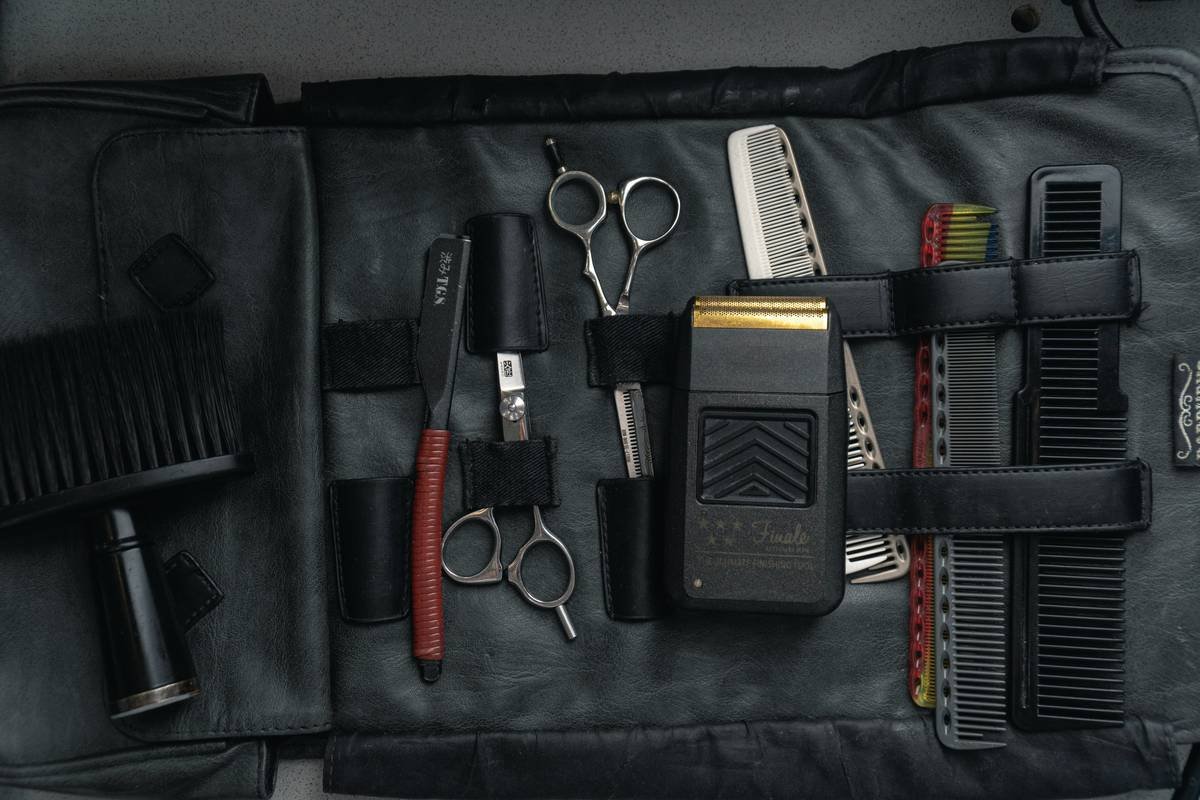
- Store upright in a ventilated case: Prevents moisture buildup that corrodes steel.
Terrible Tip Alert 🚫
“Just use your girlfriend’s eyebrow scissors!” Nope. Eyebrow scissors lack the length and leverage needed for beard work—and sharing personal grooming tools spreads staph infections. Don’t risk it.
Rant Corner: My Niche Pet Peeve
Why do brands keep including those useless “detail trimmers” with zero guard options and battery life shorter than a TikTok trend? If it can’t hold a charge long enough to finish one side of my jawline, it’s landfill bait. Real pros use corded clippers or full-size wireless models with interchangeable combs—not toy-grade gadgets.
Real-World Results: A Barber and a Client Transformed
Last winter, I shadowed Marco Ruiz, a master barber in Austin with 15 years of experience. He agreed to train his regular client, Derek (a software engineer with a wiry, 3-inch beard), to groom at home using only professional-grade tools.
Before: Derek used a $20 Amazon kit—plastic comb, dull scissors, synthetic brush. Result? Patchy shaping, flaky skin, constant itching.
After 8 Weeks: With a Kai 6-inch shear, Kent handmade acetate comb, and 100% boar brush, Derek achieved consistent lines, reduced dandruff by 80%, and saved $120/month on barber visits.
Marco’s advice? “Your tools are an extension of your hand. If they fight you, your beard will look like it’s fighting back.”
FAQ: Professional Beard Grooming Tools
Are professional beard grooming tools worth the price?
Yes—if you’re serious about beard health and aesthetics. A $60 pair of barber scissors can last 5+ years with care, whereas cheap pairs fail in 3–6 months. Calculate cost-per-use: pros often pay less long-term.
Can I use regular hair clippers for my beard?
Not ideal. Beard hairs are coarser and grow at different angles. Dedicated beard trimmers have finer T-blades, closer-cut settings (as low as 0.2mm), and better maneuverability around jawlines.
How often should I replace my beard brush?
Every 12–18 months, or sooner if bristles splay outward or shed excessively. Boar bristles wear down with use, reducing their oil-distributing efficacy.
Do I need both a comb and a brush?
Yes. Combs detangle and define lines; brushes condition, exfoliate, and style volume. They serve complementary functions.
Conclusion
Professional beard grooming tools aren’t about luxury—they’re about precision, hygiene, and respect for your facial hair’s biology. Whether you’re maintaining a short boxed beard or a Viking-length mane, investing in purpose-built, high-quality implements pays off in smoother texture, healthier skin, and sharper definition. Ditch the gimmicks. Build a minimal, expert-backed kit. And for Pete’s sake—stop using craft scissors.
Like a Tamagotchi, your beard needs daily care… but thankfully, it won’t beep angrily if you forget.
Beard soft as dawn,
Steel whispers through coarse strands—
No more static cling.